A machine can power on, pass a dry run, and still fail when real product hits the line. Within the pharmaceutical industry and the broader life sciences sector, equipment qualification serves as the documented proof that systems are installed correctly, operate within defined limits, and remain reliable over time.
This process is vital for medical devices and other regulated products, as it establishes a foundational baseline for quality assurance. Providing this proof before routine production starts protects patients, supports consistent product quality, and significantly reduces the risk of costly deviations, rejected batches, manufacturing delays, and potential inspection trouble.
Key Takeaways
- Evidence-Based Assurance: Equipment qualification is a mandatory, documented process that proves systems are fit for their intended use, moving manufacturing away from relying on assumption-based operations.
- The Qualification Lifecycle (IQ/OQ/PQ): A structured approach—Installation, Operational, and Performance Qualification—ensures that equipment is correctly installed, functions within defined parameters, and performs reliably under actual production conditions.
- Foundational to Process Validation: High-quality equipment qualification is the prerequisite for successful process validation; without it, manufacturing teams cannot guarantee a controlled, stable state for production.
- Risk Mitigation: Proactive qualification reduces the likelihood of costly manufacturing deviations, rejected batches, and regulatory non-compliance during audits by identifying setup gaps before they impact product quality.
- Continuous Maintenance: Qualification is a lifelong process that must be updated through periodic review and change control to account for equipment wear, software updates, and shifts in process demands.
Building a Foundation with “user requirement specifications (URS)” and “design qualification (DQ)”
Equipment qualification shows more than basic function. It shows that a system is fit for use under the conditions your process will actually face. In a good manufacturing practice (GMP) setting, assumptions are weak controls. Approved protocols, executed tests, resolved exceptions, and traceable records are what hold up under review.
Before physical testing begins, design qualification (DQ) serves as the critical first step. This process ensures that the equipment design aligns perfectly with your user requirement specifications (URS) and manufacturer specifications. By verifying these requirements early, you confirm that the chosen system is technically sound and capable of meeting your specific process needs before it ever arrives on the production floor.
FDA expectations point in that direction. A useful summary of FDA equipment qualification requirements notes that equipment must be suitable for its intended use. If a company cannot show how it reached that conclusion, the equipment is running on trust, not evidence.
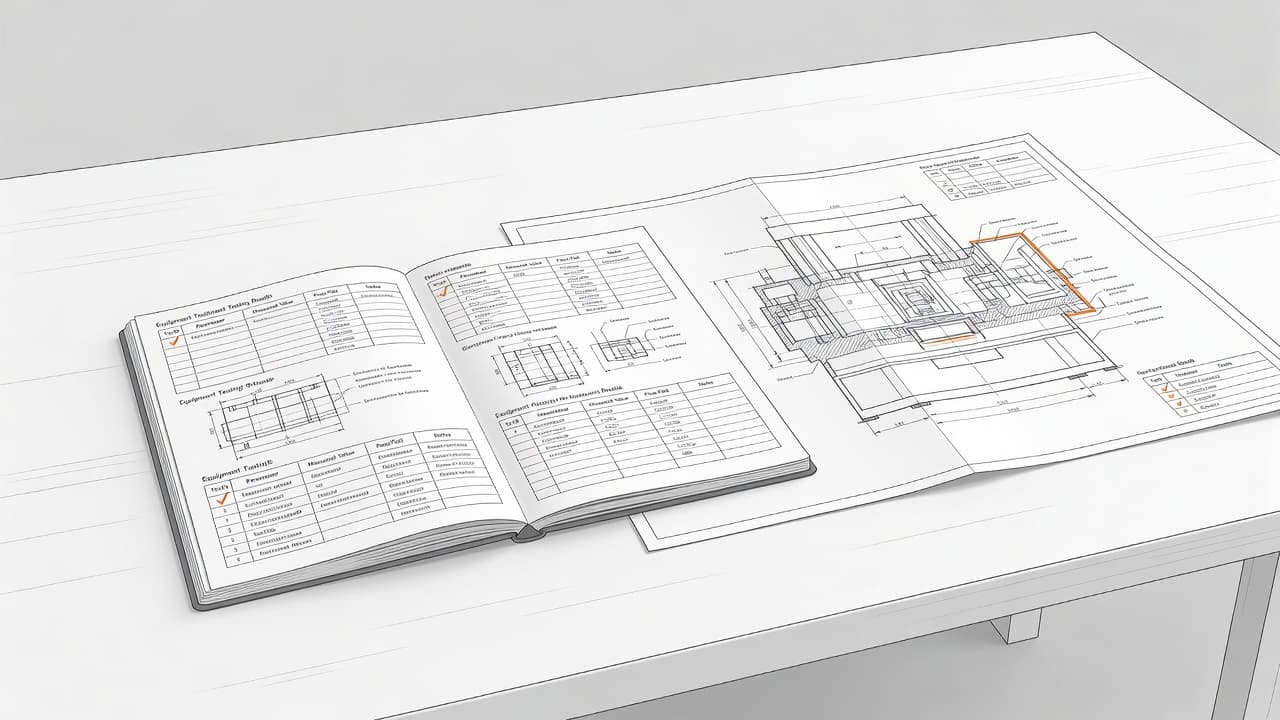
How IQ, OQ, and PQ work together
Once the design is verified, the qualification process moves into the execution stages to answer three practical questions: was it installed right, does it run right, and does it perform right in use?
- Installation Qualification (IQ): This stage confirms the equipment arrived and was installed correctly. It verifies that utilities, materials of construction, software versions, spare parts, manuals, instrument calibration, and environmental conditions all align with the documented requirements.
- Operational Qualification (OQ): This stage verifies that the equipment functions as intended across its required operating ranges. It involves testing against defined operational parameters to ensure that controls, alarms, interlocks, setpoints, and challenge conditions consistently meet all acceptance criteria.
- Performance Qualification (PQ): This stage confirms that the equipment can support the real process using normal materials, approved methods, and trained operators. It involves following standard operating procedures (SOPs) and rigorous test protocols to prove the system performs reliably under actual production conditions.
Why being fit for use is more than a checklist
Qualification is not a paperwork drill. A signed protocol means little if the testing missed the real risks. A mixer may turn on, but can it hold speed under full load? A freezer may hit temperature, but does it recover after routine door openings?
Good qualification reflects the intended product, process, and operating limits. It confirms dependable performance where failure would affect quality, not only where testing is easy.
How equipment qualification supports process validation and product quality
Stable equipment is the base for process validation. If the machine drifts, sticks, overheats, or fails to meet data integrity requirements, the process data built on it loses value. The FDA’s Process Validation guidance assumes a controlled state, and that starts with equipment that has already shown repeatable performance to ensure regulatory compliance.
Why “process validation” depends on a “validation master plan (VMP)”
The validation master plan (VMP) acts as the foundation for this effort, as it outlines the overall qualification strategy for the entire facility. When equipment is weakly qualified, teams often confuse equipment variation with process variation. That can lead to weak limits, false alarms, or validation runs that need to be repeated. As a result, time slips, costs rise, and confidence in the data drops.
Decision-makers should view the VMP as a structural necessity. You cannot claim a process is reliable if the underlying machine has not shown consistent control through a robust validation master plan (VMP).
What good qualification means for day-to-day manufacturing
Strong qualification keeps paying off after approval. Scale-up is smoother because load limits and control settings are already known. Tech transfer goes better because receiving sites get tested ranges and clear records, not undocumented know-how.
Daily manufacturing also gets steadier. When operators change, raw material lots shift, or production volumes increase, qualified equipment gives the team a proven operating space. That usually means fewer surprises, less rework, better product quality, and more consistent control of critical process parameters.
The common failures that come from inadequate qualification
Poor equipment qualification rarely fails in one dramatic moment. More often, small gaps stay hidden until production pressure exposes them. A missed alarm challenge, incomplete software check, or incorrect utility hookup can sit unnoticed until a batch depends on it. Furthermore, inadequate qualification often leaves behind gaps in documented evidence that become glaring issues during an audit.
How small setup errors can turn into big batch problems
Simple setup issues can create expensive quality events later. Compressed air at the wrong pressure can change actuator response, and minor deviations from your standard operating procedures can lead to inconsistent results. For example, a temperature probe lacking accurate instrument calibration can push a hold step outside the target range. Similarly, missing recipe settings can cause under-mixing or over-filling.
Each problem looks small during setup. Later, the same problem can trigger a deviation, a rejected batch, a long investigation, or even a recall.
Missing evidence can damage your position almost as much as a failed test.
What regulators expect when qualification is weak or incomplete
Regulators expect clear proof that equipment was installed, challenged, approved, and maintained in a controlled way. Missing signatures, weak traceability, inconsistent dates, and unexplained test exceptions raise questions quickly. When these documentation lapses occur, they signal a lack of regulatory compliance that invites deeper investigation.
The compliance risk is practical, not abstract. Inspection observations, warning letters, and added scrutiny often follow weak records or incomplete evidence. Then the business impact shows up in remediation work, delayed decisions, and less confidence in released product.
A lifecycle approach keeps equipment qualified over time
Equipment qualification does not end after startup. Equipment ages, parts wear, software changes, and process demands shift. If the use case changes, or if environmental conditions within the facility fluctuate, the original qualification status may no longer align with current operational risks.
When periodic review and requalification are needed
Common triggers for reassessment include major repairs, control system upgrades, equipment moves, repeated deviations, and new products with tighter specifications. Sites should also review calibration status, maintenance history, and performance drift trends at defined intervals.
Waiting for a failure to force that review usually results in higher costs. By then, the team may be forced to manage batch impact, root cause investigations, and regulatory inquiries simultaneously.
How to build a stronger qualification strategy across the equipment life cycle
A robust strategy begins before the purchase order is issued. User requirements, vendor review, commissioning, qualification, maintenance, change control, and eventual retirement should remain connected across the full equipment life cycle.
Adopting a risk-based approach helps teams prioritize testing where failure would most significantly impact product quality. Clear ownership is also essential, as Engineering, Quality, Manufacturing, Validation, and IT departments each contribute to the compliance narrative. Companies that require professional commissioning, qualification, and validation support often accelerate their timelines because execution and documentation are integrated into a single plan aligned with good manufacturing practice (GMP). If your program has identified gaps or if a major facility change is imminent, Schedule a Free Call to review the risk before it reaches the batch record.
Frequently Asked Questions
What is the primary difference between commissioning and qualification?
Commissioning is the initial process of ensuring that equipment is installed and functioning as the manufacturer intended. Qualification is the formal, regulated documentation process that proves the equipment meets specific user requirements and is ready for use in a GxP environment.
Can equipment be considered qualified if the initial testing was never documented?
No, in a regulatory environment, if it is not documented, it did not happen. Regulators require clear, traceable evidence of installation, operational testing, and performance results to confirm that equipment is suitable for production.
How often should equipment undergo requalification?
Requalification should occur following major changes such as physical relocation, software upgrades, or significant hardware repairs. Additionally, periodic reviews should be conducted based on a risk assessment to ensure the system has not drifted from its qualified state over time.
Why does equipment qualification impact the speed of tech transfer?
Having a fully qualified system provides receiving sites with a pre-validated operating space, documented load limits, and known control settings. This eliminates the need for redundant testing and provides a clear, proven baseline that allows for faster and more consistent production startup.
Reliable production starts with qualified equipment
Reliable production begins long before the first commercial lot hits the floor. Relying on qualified equipment provides definitive proof that your manufacturing process stands on stable ground, which directly protects patients and makes upcoming regulatory inspections significantly easier to manage.
When that proof is weak, the risks to product quality, regulatory compliance, and production schedules rise in tandem. Conversely, when your foundation is solid, teams can execute process validation with confidence, maintain operations with fewer unexpected disruptions, and stay prepared for the next audit. Ultimately, these efforts serve as the cornerstone of quality assurance throughout the pharmaceutical industry. By prioritizing a rigorous equipment qualification strategy, you ensure that your facility remains compliant and consistently delivers high-quality outcomes.