Every regulated operation faces unplanned events. The FDA expects these occurrences to happen, but what truly matters is whether your deviation investigation shows clear facts, sound judgment, and consistent follow-through.
Weak investigations create more than just paperwork trouble. They can hide repeat failures, raise questions about data integrity, and trigger serious problems with regulatory compliance. A strong record demonstrates that the company identified the issue, understood the risk, and maintained control from the very start.
Key Takeaways
- Prioritize Objective Evidence: Start every investigation with clean, verifiable facts rather than early assumptions or theories to ensure the record remains unbiased and clear.
- Dig Beyond Human Error: FDA expects investigations to uncover systemic root causes—such as poor process design or equipment issues—rather than settling for simplified “operator error” labels.
- Perform Broad Impact Assessments: Do not limit your review to a single batch; analyze potential effects on shared equipment, related processes, data integrity, and clinical subject safety to demonstrate a thorough understanding of the scope.
- Close the Loop with Targeted CAPA: Ensure that corrective and preventive actions directly address the identified root cause and include verifiable effectiveness checks to prevent the recurrence of the issue.
The first thing FDA checks: did you catch the deviation fast and document it well, focusing on incident discovery?
FDA often starts at the beginning of the event. Inspectors want to see when the deviation was found, who recorded it, and how quickly the site moved from discovery to triage. Early, clean documentation shows the issue was taken seriously.

Start with the facts, not the guesswork
The initial deviation report should separate known facts from early theories. A good opening entry states what happened, when it happened, where it happened, who found it, and how it was detected. It also captures the condition of the process at that moment.
That first report should be plain enough for someone outside the area to follow. If a reviewer needs hallway context to understand the event, the record is too thin. Clear facts make later analysis stronger because the team is not forced to rebuild the timeline from memory.
Assumptions belong in the analysis section, not in the event description. If the form says an operator likely caused the deviation before any review starts, the file already looks biased.
Classify the issue so it gets the right level of attention
Once the event is logged, FDA expects a risk-based approach to triage. The company should decide early whether the issue could affect product quality, patient safety, data reliability, or compliance status. That decision drives which quality assurance teams get involved and how fast containment starts.
A missed signature and a sterilization cycle failure do not need the same response. Still, both need a documented rationale for their classification. Inspectors look for that logic because poor triage often leads to slow escalation, incomplete review, or late product holds.
If your team struggles with early classification, better procedures and professional deviation and CAPA management services can help tighten escalation paths and improve your overall deviation management before an inspection exposes the gap.
FDA expects a root cause investigation, not a quick blame statement
A weak root cause statement is easy to spot. Labels such as “human error” or “operator mistake” rarely satisfy FDA because they describe who was involved, not why the failure happened.

> “Human error” rarely holds up unless the record shows why the person made the error and what the system allowed.
Use evidence to prove the cause
A credible root cause analysis connects evidence to the conclusion. This step requires rigorous evidence gathering, including a thorough review of batch records, equipment logs, alarm history, audit trails, and maintenance records. Often, cross-functional teams are necessary to synthesize this data and ensure that all technical factors, such as equipment performance and specialized lab findings, are accounted for in the investigation. The final root cause should fit the facts, and those facts must be easily traceable in the quality file.
If the evidence conflicts, the investigation should say so and explain how the team resolved the discrepancy. FDA would rather see an honest, well-supported conclusion than a fast answer built on opinion. Many warning letter examples on root cause analysis show the same failure pattern: firms close events with weak logic, then see the problem return.
Go deeper than the symptom on the floor
The event on the surface is often only the last link in the chain. A line stoppage may look like an operator miss, yet the deeper root cause could be a vague set of standard operating procedures, poor line clearance design, worn equipment parts, or training that never covered the edge case.
Strong investigations keep asking why the failure was possible. They look at system gaps, not only individual actions. That matters because FDA wants evidence that the company understands the process well enough to prevent a repeat.
Recent 2026 inspection trend summaries keep pointing to the same issues: inadequate investigations, poor documentation, and failure to follow good manufacturing practices. These are not abstract quality problems. They are signals that the site may not be learning from its own deviations, which undermines the long-term reliability of your operations.
How FDA judges the impact assessment on product, data, and patients
Finding the cause is only part of the job. The FDA also wants a comprehensive impact assessment that asks what else the event may have touched. A narrow review can make a decent investigation look incomplete and may put product quality at risk.
Think beyond the batch in question
The first affected lot is rarely the full scope. If a deviation involves shared equipment, a utility system, incoming material, software, or a repeated process step, the review should extend to other batches and related records. That may include prior lots, later lots, retained samples, cleaning status, environmental data, and open work orders.
This wider view matters because contamination, mislabeling, data errors, and process drift do not always stay inside one record. Training on deviation and CAPA resolution often stresses this point for a reason: companies get into trouble when they stop the impact assessment too early.
A strong investigation explains why related areas were included or excluded. That reasoning protects the investigation if an inspector later asks, “How do you know this was limited to one batch?”
For clinical work, protect subjects and data integrity
For clinical operations, FDA regulations significantly expand the scope of required documentation. Subject safety, subject rights, and data reliability all sit inside the impact review. A missed dose, delayed safety lab, inaccurate source entry, protocol deviation, consent problem, or subject withdrawal can carry both medical and data consequences that directly threaten patient safety.
The investigation should state who was affected, whether a medical review occurred, whether the sponsor and study team took immediate action, and whether reporting duties applied. If data may be unreliable, the file should show how the team assessed useability and what happened to the affected dataset.
Clinical records also need the same basic discipline as manufacturing files. The facts must be clear, the timeline must hold together, and the final conclusion must match the evidence to ensure that any necessary CAPA effectively addresses the root cause.
A strong deviation investigation ends with CAPA that actually fixes the problem
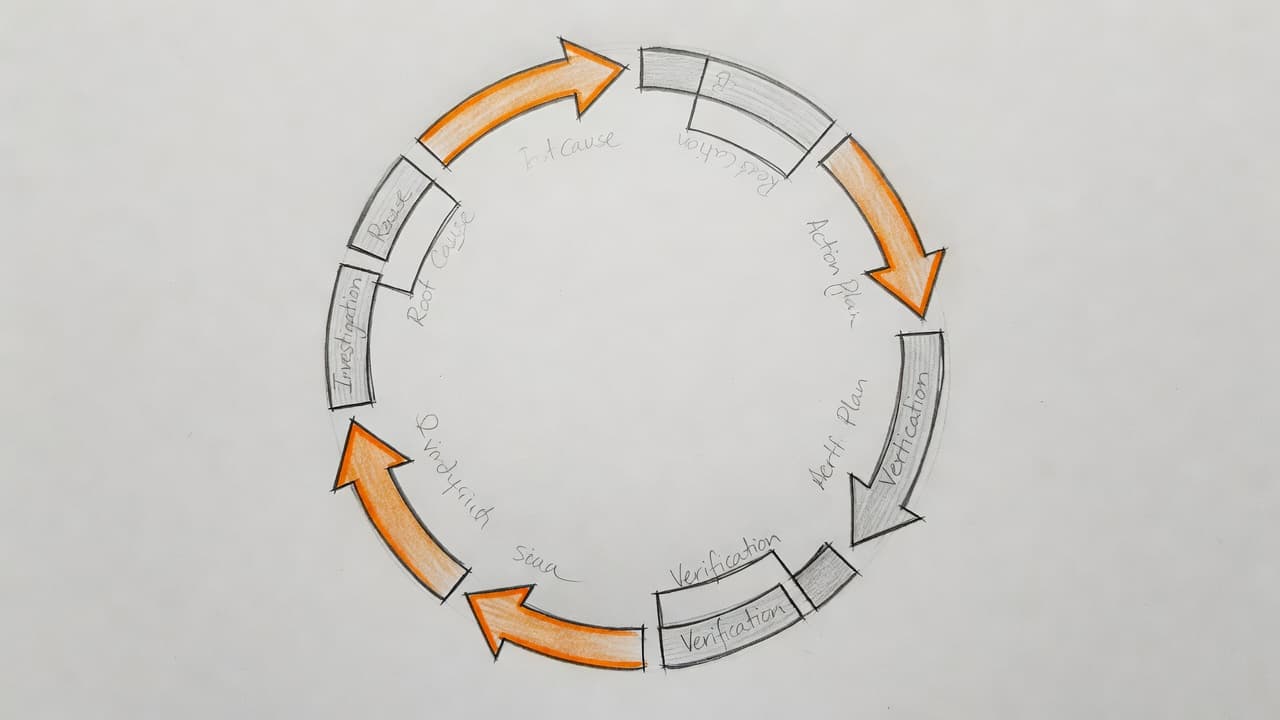
FDA does not stop at the report. Inspectors want to see a closed loop. That means containment actions, corrective and preventive actions (CAPA) tied to the root cause, and proof that the fix worked.
Contain the risk right away
Containment starts before the full investigation ends. If there is a possible quality or safety impact, FDA expects quick action. That may mean placing product on hold, stopping use of affected equipment, quarantining materials, adding extra checks, or notifying quality, manufacturing, clinical, or medical leaders.
The investigation report should show when those steps happened and why they were chosen. Slow or vague containment actions raise an obvious concern: if the risk was real, what happened while the team was still deciding what to do?
Build CAPA from the root cause, then verify it worked
CAPA should match the cause, not merely the symptom. Generic retraining and a reminder email rarely fix a weak procedure, a poor system design, a drifting instrument, or an overloaded review process. FDA expects actions that line up with what the investigation proved.
Each action needs an owner, a due date, and effectiveness checks. If the problem was procedural, revise the document and confirm people can use it correctly. If the cause involved equipment, complete the repair, assess other units, and verify stable performance. If the event exposed a data weakness, tighten controls and test that the new controls work in practice.
Repeat deviations are often a sign that the CAPA process was closed on paper, not in the operation. If that pattern sounds familiar, it may help to Schedule a Free Call and pressure-test your deviation management process before the next inspection.
Frequently Asked Questions
Why does the FDA discourage the use of “human error” as a root cause?
Using “human error” as a root cause is often viewed as a failure to look deeper into the system. The FDA wants to understand why the system allowed the mistake to occur, such as poor training, confusing procedures, or suboptimal equipment design, rather than just blaming the individual.
How broad should an impact assessment be during a deviation?
An impact assessment must extend beyond the specific batch or record in question to include any systems or processes that could be affected. This includes evaluating shared equipment, cleaning status, environmental data, and potential trends in other lots to ensure the event’s full scope is understood.
What does the FDA look for when reviewing CAPA effectiveness?
The FDA expects CAPA to be directly linked to the root cause and to be supported by measurable verification of effectiveness. It is not enough to simply complete the tasks; the organization must demonstrate through data or observation that the corrective actions successfully prevented the problem from recurring.
Conclusion
The FDA is looking for a believable chain of evidence. The file should demonstrate fast detection, clear facts, real root-cause analysis, a broad impact review, and CAPA that closes the loop.
Every site encounters operational challenges. What separates a robust quality management system from a weak one is the ability to maintain total control when those problems appear. By prioritizing consistency and thorough documentation, organizations can ensure long-term regulatory compliance. Ultimately, a well-executed deviation investigation protects product quality, patient safety, and data integrity while making repeat issues significantly less likely.